

What people want, what technology can do, what the business needs: I find where they meet. For over a decade, I’ve done that at Microsoft AI, Google, and Uber, across enterprise and consumer products, using a mix of qual and quant methods. I thrive in 0→1, owning the research from early ambiguity to launch and helping teams build what’s next.
Outside of work, I host sofia & friends, a podcast about navigating change and living authentically, document my sabbatical on Instagram, and write on Substack.
I grew up in Shenzhen, China, spent 10 years in New York City, and now live in the San Francisco Bay Area with my dog, Milo. 🐶



Experience
- 2025 — 2026Microsoft AI · Principal UX ResearcherAI Economy, Microsoft Clarity, Brand Agents
- 2019 — 2025Google · Senior UX ResearcherGoogle Flow, NotebookLM, Area 120, Google Ads
- 2022Google · Product Manager (part-time)Internal social well-being product
- 2017 — 2019Uber · UX ResearcherGlobal driver growth
- 2015 — 2017Google · UX Research Assistant & RecruiterGoogle Analytics, UX research recruiting & ops
-
Microsoft · Brand Agents
Redefine “success” for shopping agents.
Pairing log analyses with interviews helped the team see beyond task completion and shaped new eval criteria and a more proactive agent.
Read the case study
Role: Lead researcher & project ownerDecisions shaped: Success metrics, agent design & roadmap
The challenge
Brand Agents is a shopping assistant that merchants add to their websites. Early metrics looked strong, but my interviews with merchants and shoppers told a more nuanced story, so I proactively dug in to reconcile the two.
What I did
I paired those interviews with a logs analysis I ran with engineering, mapping the full shopping journey to see where the numbers and the conversations diverged.
What we learned
Completing a task and meeting a shopper’s need aren’t always the same thing. The journey surfaced clear opportunities to help shoppers discover the agent and understand its value.
Impact
- Reframed success around real shopping journeys: product discovery, sizing and fit, reviews, customer support, and more.
- Informed a redesign that made the agent proactive and easier to find.
- Shaped the roadmap toward use cases more specific to shopping.
-
Google · Flow
Lead with why, not what.
Bringing the whole team face to face with creators helped shape Google’s generative media tools into products creators love to use.
Read the case study
Role: Lead researcher & project ownerDecisions shaped: Product narrative & strategy
The challenge
Generative media was brand new, and the team wanted to understand how creators would actually fit these tools into their work.
What I did
I partnered with business development to recruit established and emerging creators, then brought the product team to LA for a series of hands-on workshops.
What we learned
Creators were curious but cautious. They cared less about the technology itself and more about what it meant for their creative process and community.
Impact
- Shifted the product story from showcasing capabilities to showing creators why it matters, which led to templates and community features.
- Brought creators into the process, so their feedback guided the product.
- Flow now has 25M+ monthly users, and 100M+ videos were made in its first three months.
-
Google · NotebookLM Audio Overview
Watch what people show, not just what they say.
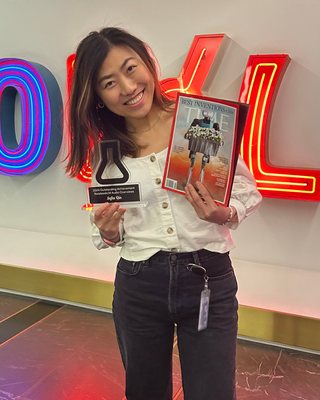
Seeing participants’ eyes lighting up gave the team the conviction to launch a feature that went viral and made TIME’s Best Inventions of 2024.
1:43Read the case study
Role: Key contributorDecisions shaped: Launch decision
The challenge
Concept tests are full of polite false positives. Paid participants want to be helpful, and people can’t reliably predict how they’ll behave in real life, so you often hear “sure, I’d use it” without truly feeling confident.
What I did
As part of a weekly rapid concept-testing program, I tested the Audio Overview prototype with five participants, paying close attention to nonverbal signals like expressions, energy, and whether people leaned in. The whole team observed live, and I shared clips of the strongest moments, so they saw the reactions firsthand.
What we learned
When we showed the Audio Overview prototype, participants’ eyes lit up. The delight centered on two moments: hearing a document turn into a two-host podcast with natural banter, and being able to dial in and talk with the hosts.
Impact
The research gave the team a vote of confidence to ship. Audio Overview launched as part of NotebookLM, weekly active users grew 10× within days, the feature went viral, and TIME named it one of the Best Inventions of 2024.
-
Google Area 120 · Gen Z shopping app
Invent the method when the usual one won’t do.
A Wizard-of-Oz diary study let Gen Z shoppers try an app before it was built, helping the team focus on a bigger opportunity.
Read the case study
Role: Lead researcher & project ownerDecisions shaped: Product direction & YouTube roadmap
The challenge
An Area 120 team was exploring an app that turns social videos into affordable outfit finds, and wanted more conviction on the need and the technology before building.
What I did
I ran a multi-day diary study with 30 Gen Z fashion lovers. They showed how they shop today, then tried a simulated version of the app, with the team hand-picking results behind the scenes.
What we learned
Shoppers were already resourceful at finding alternatives, so the app felt like a nice-to-have. That pointed the team toward more pressing needs.
Impact
- Saved about three months of engineering time, and the team moved on to a more promising direction.
- Led to a design sprint that shaped YouTube Shorts shopping’s 2023 roadmap.
-
Google Ads · Insights
Find the moment that breaks the flow.
A study with 12 advertisers found the real reason ML insights went unused and led to a simpler way to act on them, which went on to drive significant Ads revenue growth.
Read the case study
Role: Lead researcher & project ownerDecisions shaped: Product redesign and cross-team alignment
The challenge
Google Ads surfaced ML-powered insights, but early adoption was low. The team assumed advertisers resisted automation out of job-security fears.
What I did
I recruited 12 advertisers with mixed attitudes toward automation and had them review and act on insights for their own campaigns.
What we learned
- Even advertisers wary of automation were curious to apply insights.
- The real breaking point came when they clicked to apply a recommendation: they were sent to a different page, lost all context, and the cognitive load spiked.
Impact
Advertisers could now apply recommendations right where the insight appeared. Insights went on to contribute to significant Ads revenue growth, and Google’s Chief Business Officer highlighted it on Alphabet’s Q4 2020 earnings call.
-
Uber · Driver churn
Test the assumption before it costs you.
Unpacking why drivers left uncovered a hidden, fixable kind of churn and saved millions in acquisition costs.
Read the case study
Role: Lead researcher & project ownerDecisions shaped: Retention strategy & new features
The challenge
In 2018, as Uber’s brand faced public scrutiny, the company saw significant driver churn, and the team assumed brand perception was to blame. Acquiring drivers is expensive, so every lost driver hurt.
What I did
I started with interviews with churned drivers, which quickly showed that churn wasn’t one thing:
- Voluntary: driven by brand perception, as expected.
- Situational: mostly part-time drivers taking a break. They didn’t see themselves as churned; that flexibility was why they drove for Uber in the first place.
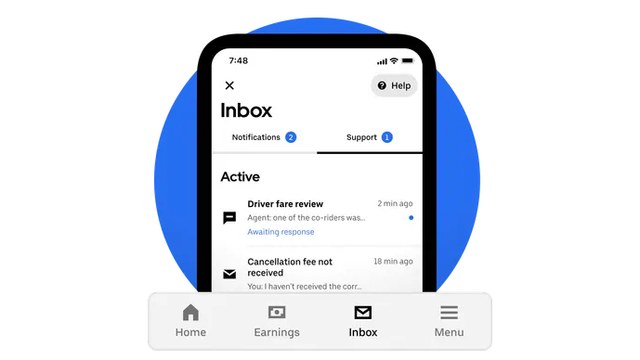
- Involuntary: the nugget of gold. These drivers wanted to drive but couldn’t. Expired documents had logged them out of the app, and getting back meant a slow trip through support.
A follow-up survey of ~400 churned drivers showed involuntary churn was far from rare.
Impact
Uber began reminding drivers to renew documents and built a reactivation flow. Since each returning driver avoided a full acquisition cost, the fixes saved millions.
I help early-stage startups answer their riskiest questions and find clarity and inspiration. What I offer:
- 01Discovery researchWho your users are and what they really need
- 02Concept testingWhich ideas are worth building
- 03Design researchMaking sure the experience lands
- 04Target audienceFinding the people who need your product most
- 05Launch messagingTelling the story that reaches them
Ways to work together: a consultation call, a one-off study, or an ongoing research partnership.
-
sofia & friends
My podcast about navigating change and living authentically, told through my own stories and those of friends I admire.
-
Sofia’s Substack
Personal reflections on mental health, my relationship with work, and figuring out who I am along the way.
Want to talk about research, building products, or the podcast? Let’s connect.